
Organisational culture that becomes behaviour: Egypt and the Gulf
GoldinKollar is a People & Culture consultancy working on organisational culture assessment, target culture design and values-to-behaviour activation. We work in Arabic and English, and our instruments and frameworks are built for Egypt, Saudi Arabia, the UAE, Oman and Qatar.
- Engagement
- Retention
- Performance
- Compliance
- Advocacy

 Written and reviewed by Islam Yousry, Head of Research and Strategy ·
 What is organisational culture? A working definition
Organisational culture is the set of shared assumptions, norms and rewarded behaviours that determine how work actually gets done in an organisation, not the values printed on a wall. It is observable in what leaders tolerate, what gets promoted, what gets escalated, and what people do when no policy applies.
Culture is commonly misread as atmosphere: office design, social events, tone of voice, the mood in the room. Those are outputs. The inputs are structural. Culture is produced by the systems that decide who gets promoted, which behaviours are rated highly at calibration, which risks are punished, who is allowed to disagree with whom, and which problems reach a decision-maker. Change the announcement and nothing moves. Change what is rewarded and behaviour follows.
That is why culture is diagnosable rather than merely describable. A culture assessment reads the gap between the culture an organisation has and the culture its strategy requires, then traces that gap back to the specific systems producing it. A values statement is a hypothesis about behaviour. Culture work is the engineering that makes the hypothesis true, or exposes it as false.
Signs your culture change effort has stalled
These are the sentences a culture diagnosis usually starts from. Each one points at a different failure in the system, not at the people.
- Our values are on the wall and in the induction deck, but nobody can tell you what they mean on a Tuesday.
- Engagement scores dropped for a second year running and nobody can explain the cause.
- People agree in the meeting and then do something different afterwards.
- Nobody raises a problem until it is too expensive to fix.
- Departments hoard information and blame each other for delays.
- We acquired a business and eighteen months later there are still two ways of doing everything.
- Our strongest mid-level managers leave for the same salary somewhere else.
What it looks like when it runs.
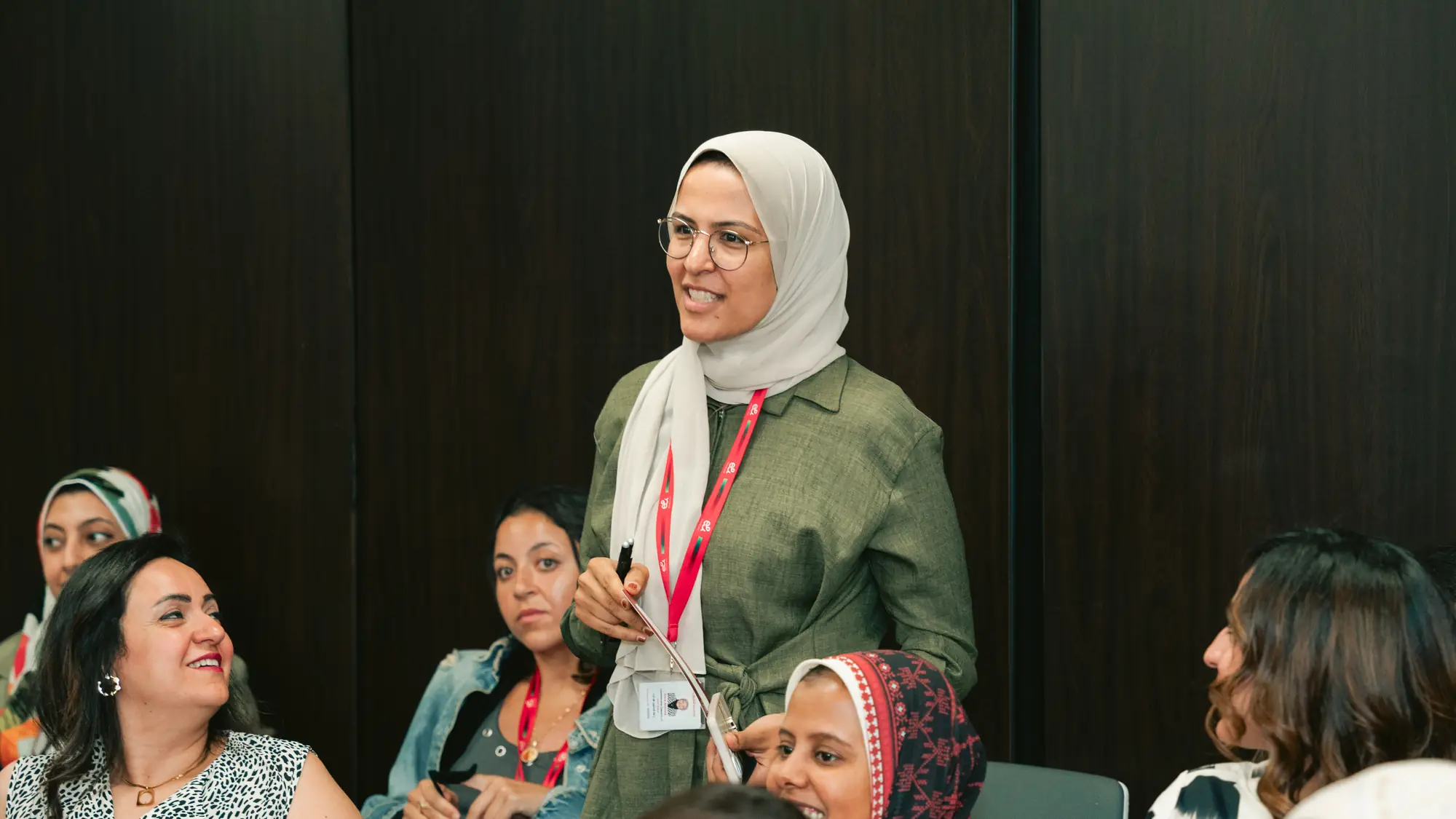
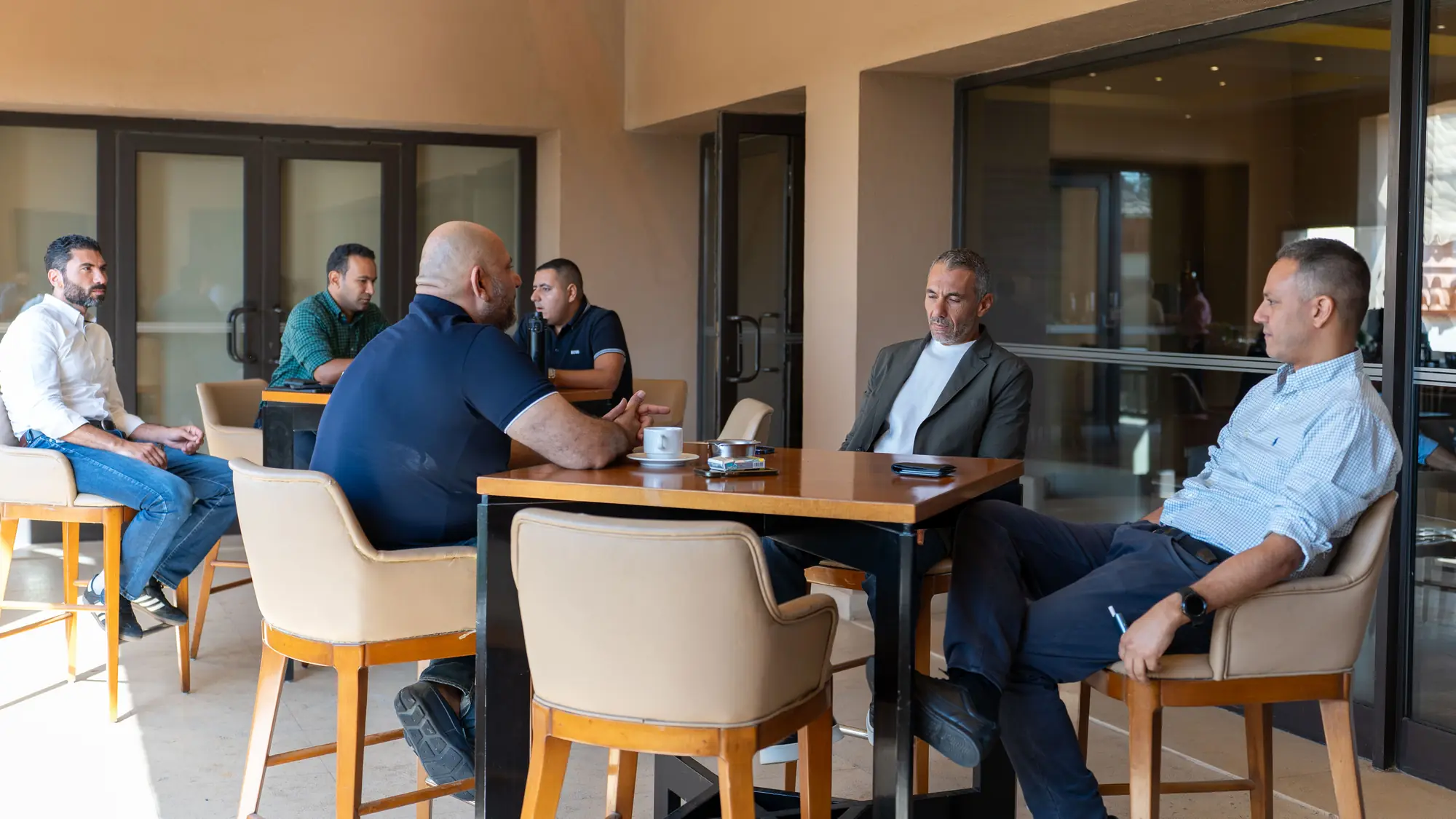
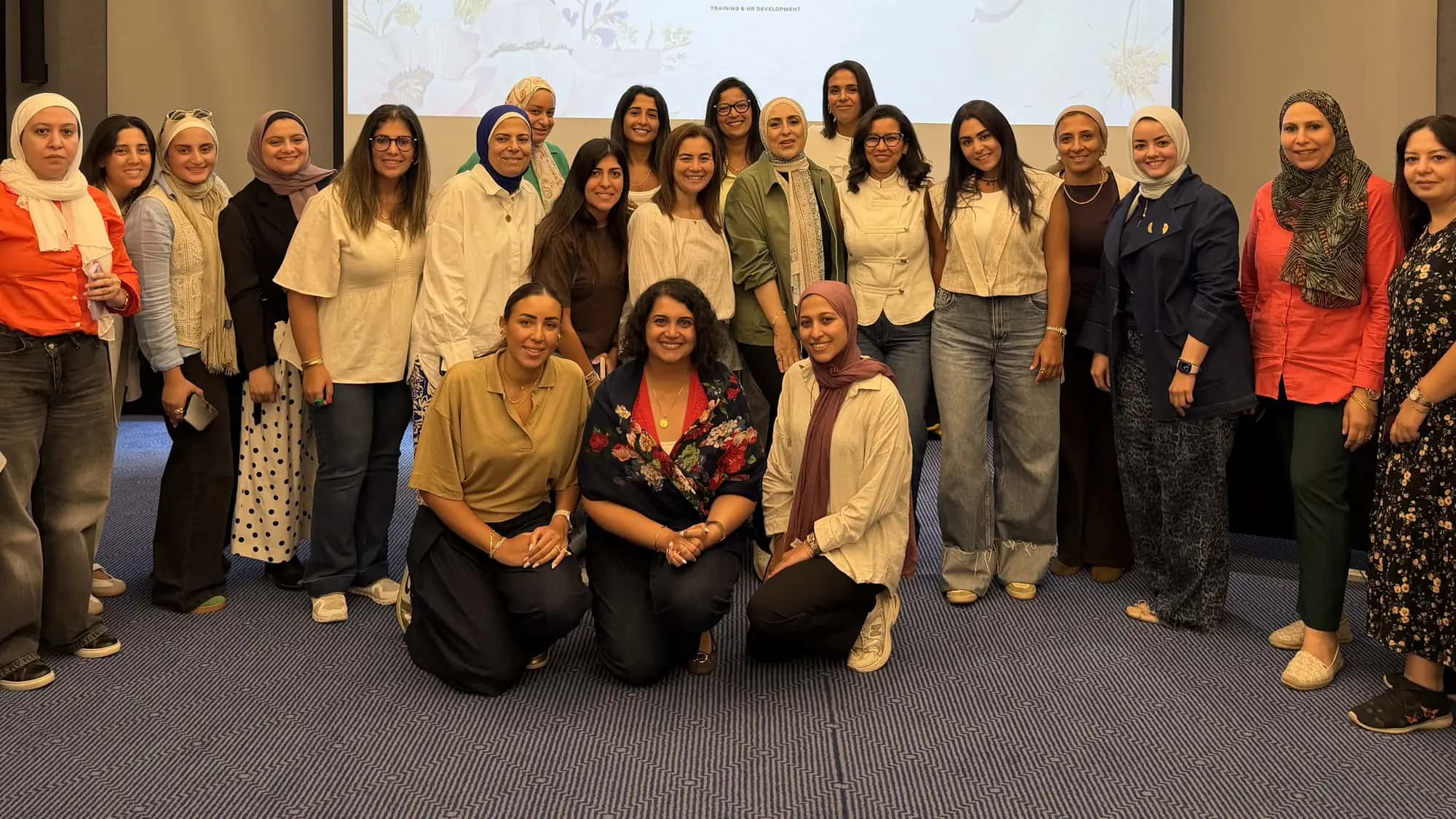
Real programs with real people. Tap one to see how we run it.


Culture change in Egypt, Saudi Arabia and the Gulf
Culture work in this region carries a policy dimension that culture work elsewhere does not. Workforce nationalisation programmes change the composition of teams on a defined timetable: Saudisation administered through Nitaqat, private-sector Emiratisation targets set by UAE Cabinet resolution and enforced by MoHRE, with Nafis — the federal programme run by the Emirati Talent Competitiveness Council — providing the incentives and placement routes behind them, and Omanisation. That is a culture question before it is a compliance question. When national hires join organisations whose informal norms, mentoring habits and progression paths were built around a long-serving expatriate cohort, the stated commitment and the lived experience diverge quickly. The pace set by Saudi Vision 2030 adds pressure of its own, because organisations are asked to become faster and more entrepreneurial while their internal systems still reward caution and seniority. A culture profile that is not segmented by nationalisation cohort reads the average and misses the story.
Workforce structure is the second difference. Where an employer runs a large frontline and deskless population in retail, hospitality, manufacturing, logistics, field operations or healthcare alongside a smaller corporate core, with several nationalities and at least two working languages in the same building, workforce structure itself sets the design brief for the instrument. Culture surveys written in English and distributed by corporate email systematically exclude the people whose behaviour most affects customers. That is specifically fatal to a culture diagnosis: a current-versus-preferred profile is only worth reading by cohort, and if the frontline cohort did not respond, the gap you report is the corporate core's gap wearing a company-wide label. We build Arabic-first and English instruments in parallel rather than translating at the end, and reach frontline populations where they already are, which in practice means mobile and often WhatsApp. We treat a weak response rate as a distribution problem first and a trust problem second, and we test that order rather than assume it.
Third, seniority. Disagreement upward is rarely free here, and problems tend to travel sideways rather than up, which is why imported culture programmes that treat informality as a proxy for openness fail and deserve to. Speak-up capability has to be engineered through structure: protected escalation routes, named invitations to dissent, senior leaders modelling the behaviour first. Confidentiality has to be defensible for the same reason, because people calibrate what they say to who they believe will read it. Employee data collected in Egypt falls under Personal Data Protection Law 151/2020, whose executive regulations were issued in 2025 and bring licensing and registration obligations for controllers and processors into force during the implementation window, and Saudi Arabia's PDPL governs personal data there. Consent, anonymity thresholds and processing location are design decisions taken before the instrument goes out, not afterwards.
Large-headcount employers with substantial blue-collar and shared-services populations, an Arabic-dominant frontline and an English-dominant corporate layer, and family-founded organisations professionalising governance while the founder's preferences remain the strongest cultural signal in the building. Employee data handled under Law 151/2020 and its 2025 executive regulations.
Nitaqat-driven Saudisation reshapes team composition, while the pace set by Vision 2030 pushes organisations towards speed and accountability. Culture profiles must be read separately for Saudi national and expatriate cohorts, and instruments must run Arabic-first in Riyadh, Jeddah and the Eastern Province.
Highly multinational workforces in Dubai and Abu Dhabi, where several national cultures share one operating model and Emiratisation targets add a distinct integration challenge. Frequently the market where post-merger cultural integration and cultural due diligence are required.
A concentrated employer base in Doha with heavy project-cycle working and large contractor and frontline populations, which raises the confidentiality bar in qualitative work and usually makes interview sourcing the slowest part of the diagnosis.
Omanisation reshapes team composition, and culture work lands through respected internal figures and a longer approval path rather than a launch event. In Muscat, pacing matters more than intensity.
Our organisational culture services: assessment, target culture design, activation
Four service lines running from diagnosis to embedded behaviour. They are designed to run in sequence, and each can be bought on its own. Diagnosis is the only one we insist comes first.
Persona Quest (OCAI) culture diagnostic
01Built on the Organizational Culture Assessment Instrument (Cameron and Quinn), fielded in Arabic and English and delivered as a gamified format so frontline and deskless populations actually complete it. Item content and scoring follow the published instrument; the delivery layer is ours. Results are segmented by function, seniority, tenure, location and nationality cohort.
Culture audit
02The qualitative layer that explains the numbers: leadership interviews, cohort focus groups in Arabic and English, and a review of the artefacts that genuinely govern behaviour, meaning promotion decisions, performance calibration outcomes, incentive design, escalation records, meeting agendas and internal messages.
Target culture and behaviours framework
03Definition of the culture the strategy actually requires, translated into observable behaviours at three levels: executive, people manager and individual contributor. Each behaviour is written so that a manager can rate it without interpretation.
Culture activation programme
04Embedding the framework through managers rather than through campaigns, using the Culture Leader Kit for cascade, Psychology-Based Team Building and the Empathy Game for cross-team behaviour, and a Digital Hackathon where the change requires people to build something together rather than hear about it.
How we work: measure, strategize, implement, transfer, document
Our five stages, applied to culture. Each one has a named output here, and none of them is a values workshop.
 01
01Measure
A culture diagnosis, not a survey report. Current-versus-preferred profiles by cohort, qualitative evidence from leadership interviews and focus groups, and an audit of the systems that reward behaviour. The output names causes.
 02
02Strategize
A target culture tied to a named business outcome, the observable behaviours that express it, and a prioritised sequence of system changes. Leadership alignment happens here, in a session where the executive team has to agree what it will stop rewarding.
 03
03Implement
Manager cascade, redesigned rituals and decision rights, and experiential formats that let people practise the new behaviour rather than read about it. Performance and recognition criteria are updated in the same quarter, not the following year.
 04
04Transfer
Internal ownership of the culture cycle. HR and people managers are trained to read a current-versus-preferred profile themselves, run the manager cascade, facilitate the formats, and re-field the instrument at twelve months without us in the room.
 05
05Document
Evidence that the culture moved, read against the baseline: the twelve-month re-field of the instrument, behavioural adoption by team, and a culture playbook your organisation owns, holding the target culture, the behaviours, the manager guidance, the measurement definitions and both language versions of the instrument.
How we measure culture: OCAI, behavioural evidence and culture KPIs
Culture is measurable if you define it as behaviour. These are the measures we set at the start, so the diagnosis and the twelve-month review use the same definitions.
The distance between how employees describe the organisation today and how they say it needs to work, scored across the four Competing Values types: clan, adhocracy, market and hierarchy. Narrowing this gap, by cohort, is the primary indicator that culture has moved.
The proportion of teams where a named target behaviour is observably happening: the ritual is running, the decision is being taken at the intended level, the practice appears in performance conversations. Measured by team, not by company average.
A short psychological safety item set based on Amy Edmondson's 1999 scale, covering whether people can raise problems, admit mistakes and disagree with seniors without cost, read alongside hard signals such as escalation volume and how early in a project issues surface.
The spread in culture and safety scores between teams reporting to different managers. High variance means the culture is a manager lottery rather than an organisational property, and it is usually the most actionable finding in the diagnosis.
Employee Net Promoter Score: willingness to recommend the organisation as a place to work. Useful as a trendline and for cohort comparison, weak as a standalone target because it moves for reasons unrelated to culture.
Voluntary exits of people the organisation wanted to keep, and departures within the first ninety days. Early attrition tests whether the culture described at hiring matches the culture experienced on arrival.
From values on a wall to observable behaviours
We start from behavioural science rather than from a values workshop. A value is unmeasurable; a behaviour is not. Every statement in a target culture framework we write has to pass one test: could a manager in Riyadh and a manager in Cairo watch the same week of work and agree on whether it happened. That constraint removes most of the language that makes values launches fail. It also makes the framework usable inside performance and promotion decisions, which is the only place culture is genuinely decided.
We use AI where it removes guesswork, not as a headline. Open-text responses from a bilingual workforce are analysed across Arabic and English without flattening one into the other, then coded against the same four Competing Values types the instrument scores, so the qualitative layer and the culture profile are read on one set of axes instead of two. Where the comments and the profile disagree for a cohort, that disagreement is the finding worth chasing. Patterns a human reader would miss, such as a behaviour degrading in one region, one shift pattern or one management layer, are surfaced as hypotheses and tested against the interview evidence rather than reported as results. The judgement stays human.
Gamification is how we solve participation and practice, not how we entertain. Persona Quest turns a culture instrument into something a frontline employee will finish on a phone during a break, which is what makes cohort segmentation reliable. The Empathy Game and Psychology-Based Team Building create the conditions where a new behaviour is rehearsed under mild social pressure, because behaviour learned in rehearsal transfers and behaviour heard in a town hall does not. We are against forced fun, vanity metrics and one-off programmes. What we build is a system your managers keep running after we leave.
See 5 pieces of culture work in practiceCulture vs engagement, experience, internal communication and employer brand
These four are routinely conflated, and buying the wrong one is the most common reason a budget produces nothing. Culture is how the organisation behaves, engagement is how people respond to it, experience is what they encounter along the way, and employer brand is what outsiders are told about it.
| Term | What it actually means |
|---|---|
| Employee Engagement | Measures the response: commitment, discretionary effort, intent to stay. Engagement data tells you where the problem is; a culture diagnosis tells you what is causing it. Fix engagement scores without changing culture and they return to baseline. |
| Employee Experience | The designed journey from candidate to alumnus: onboarding, tooling, manager moments, exit. Experience is where culture is encountered in practice, one touchpoint at a time. Culture work sets the intent; experience work builds the touchpoints. |
| Internal Communication | The channels and message architecture that carry the change. Communication can explain a target culture and reinforce it, but it cannot create one. Culture programmes run as communications campaigns are the standard failure mode. |
| Employer Branding | The external promise made to candidates and the market. A promise that outruns the culture produces early attrition and poor reviews. Employer brand should be written after the culture is known, not instead of knowing it. |
Culture modules we deploy
Start with one module, prove value, then connect it into the broader system.
Persona Quest (OCAI)
Employees respond to scenarios that reveal cultural preferences and tensions. Results map to OCAI to show current vs desired culture and gap zones.
Psychology‑Based Team Building
Experiences designed using psychology and behavior change principles to strengthen trust, collaboration, and cross-silo alignment—with measurable outcomes.
Culture Leader Kit
A practical kit: leader behaviors, rituals, scripts, reinforcement methods, champion identification, and coaching guidance to sustain culture daily.
Digital Hackathon
Teams collaborate, build, pitch, and learn. A culture intervention designed to produce deliverables, not just energy.
Empathy Game
A scenario-based experience that helps teams see each other’s constraints and perspectives—reducing friction and improving collaboration.
What a culture engagement looks like: scope, timeline and what drives cost
Quote-based, because a 400-person single-site diagnosis and a five-country bilingual one share a name and nothing else. This is the shape of the work and the variables that move the number, so you can size it before you speak to us.
- Diagnosis, roughly 6 to 10 weeks
Instrument design in Arabic and English, distribution that reaches frontline and deskless populations, leadership interviews, cohort focus groups, systems and artefact audit, and a written diagnosis presented to the executive team. Can be bought as a standalone engagement, without any commitment to the later phases.
- Target culture design, roughly 4 to 6 weeks
Executive alignment sessions, a target culture definition tied to a business outcome, the values-to-behaviours framework at three levels, and the recommended changes to performance, promotion and recognition criteria.
- Activation, 6 to 12 months
Manager cascade, ritual and decision-practice redesign, experiential formats by cohort, quarterly pulse measurement, and monthly behavioural adoption reviews with the manager population.
- Transfer and proof, final 4 to 6 weeks
Capability handover to HR and internal facilitators, instrument and dashboard handover, the twelve-month re-field read against the baseline profile, and the culture playbook that lets the organisation run the next cycle without us.
- Population size, and specifically what share is frontline or deskless and needs mobile-first or offline access rather than corporate email
- Number of countries, legal entities and languages in scope, and whether cohort-level segmentation is required for nationalisation reporting
- Depth of the qualitative layer: how many leadership interviews and focus groups, and whether they run in Arabic, English or both
- Whether the engagement stops at diagnosis or continues into target culture design and activation
- How many people systems are rebuilt, since performance, reward, promotion and onboarding each carry their own design and governance effort
- Measurement duration: a single baseline versus a full baseline-to-twelve-month cycle with quarterly pulses
Engagements are scoped and quoted individually. Book a diagnosis and we will size it against your context.
Culture questions, answered
What does an organisational culture consultant do, and when should you bring one in?+
What is a culture audit, and how is a culture assessment different from an engagement survey?+
Which culture assessment should we use: OCAI, Denison or Barrett?+
What are the four culture types in the Competing Values Framework?+
Why do culture change initiatives fail?+
How long does culture change take, and what should we expect at 3, 6 and 12 months?+
How do you build psychological safety in a high power-distance workplace without undermining hierarchy?+
How much does a culture assessment and a culture change programme cost?+
Start with a diagnosis, not a launch
Book a culture diagnosis. We assess the culture you have against the culture your strategy needs, name the systems producing the gap, and tell you what to change first. If the diagnosis shows your culture already supports the strategy and the real problem sits in engagement or experience, we will say so and point you there.