
Employee experience that survives day 90, in Egypt and the Gulf
GoldinKollar is an employee experience consultancy headquartered in Cairo, serving employers in Egypt, Saudi Arabia, the UAE, Oman and Qatar. We map the employee journey, redesign the moments that decide whether people stay, and instrument the result so improvement is measurable rather than asserted.
- Retention
- Performance
- Engagement
- Advocacy
- Compliance

 Written and reviewed by Islam Yousry, Head of Research and Strategy ·
 What is employee experience? A working definition
Employee experience is the sum of what a person encounters, perceives and feels across their working life with an organisation, from the first recruiter call to the exit conversation. It spans every touchpoint: managers, systems, policies, physical and digital environments, and rituals. It is designed, measured and improved as a system, not delivered as a set of perks.
The discipline is commonly misread in three ways. The first is treating it as engagement by another name: engagement is an outcome, experience is the set of causes that produce it. The second is treating it as a technology purchase, where a listening platform is installed and the journey itself is never redesigned. The third is treating it as amenities. Office design, wellness apps and social events sit inside the experience, but they are rarely the touchpoints that decide whether a capable person stays.
The useful framing is a journey with stages: attraction, selection, offer and preboarding, onboarding, first 90 days, growth and progression, life events, transitions, and exit. Within those stages sit a small number of moments that matter, disproportionately shaping how the whole relationship is remembered. Employee experience design is the work of identifying those moments with evidence, redesigning them deliberately, and holding them to a standard the organisation can actually sustain.
Signs your employee experience is failing before day 90
Goodwill alone does not fix this. What is missing is visibility into where the journey breaks. These are the sentences that tend to open a conversation about employee experience.
- Our engagement scores look acceptable, but good people keep resigning and we cannot explain why.
- New hires are leaving inside the first 90 days, and some of them go straight back to their previous employer.
- There is a gap between what recruitment promises and what people find in their first week.
- Onboarding is a laptop, an HR induction deck and a signature on a policy pack.
- Our frontline and deskless teams are the majority of our headcount and the minority of our attention.
- Managers are the biggest variable in the experience, and we have never given them a standard to work to.
- We survey people constantly, act on very little of it, and participation is now falling.
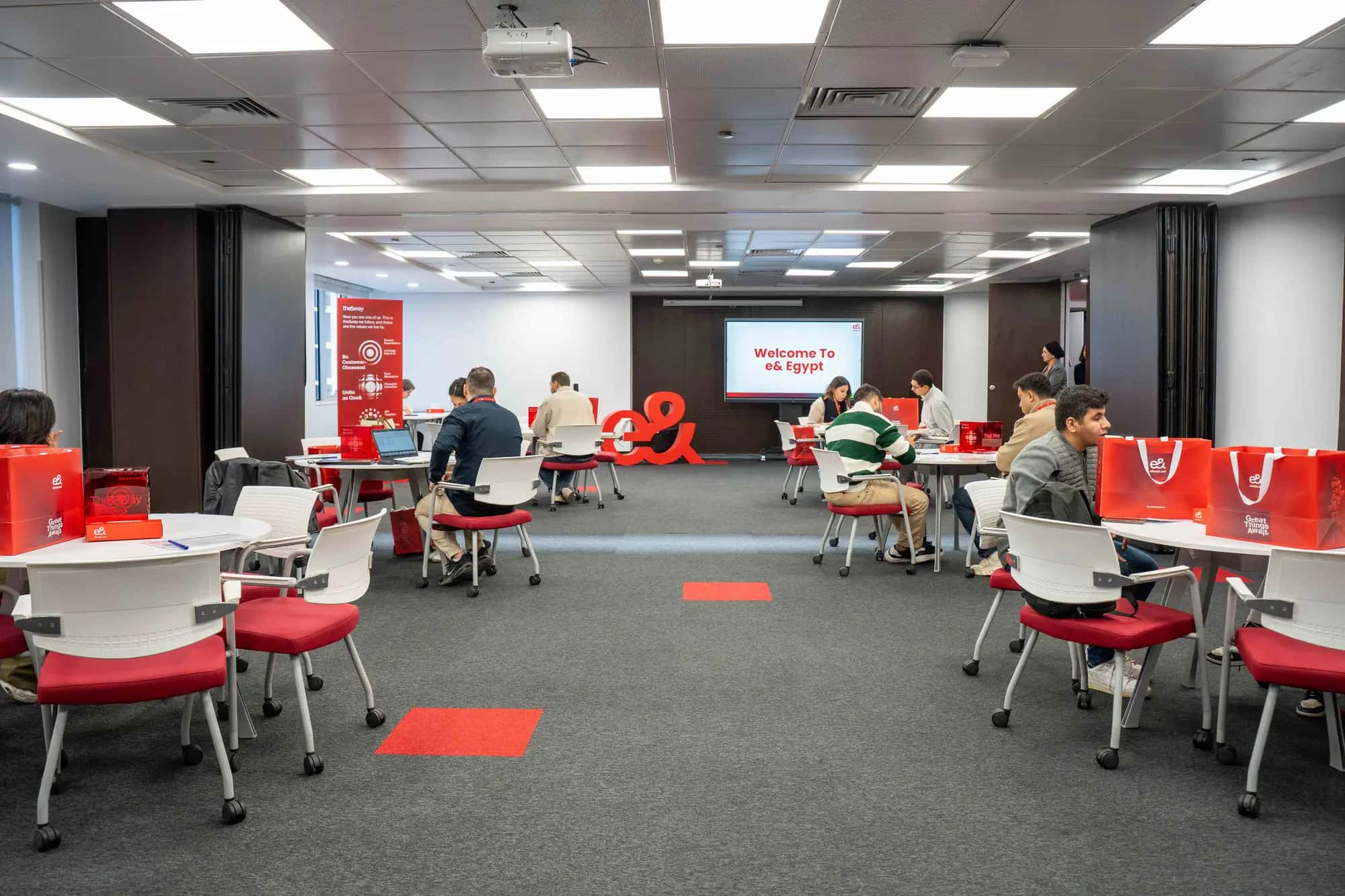
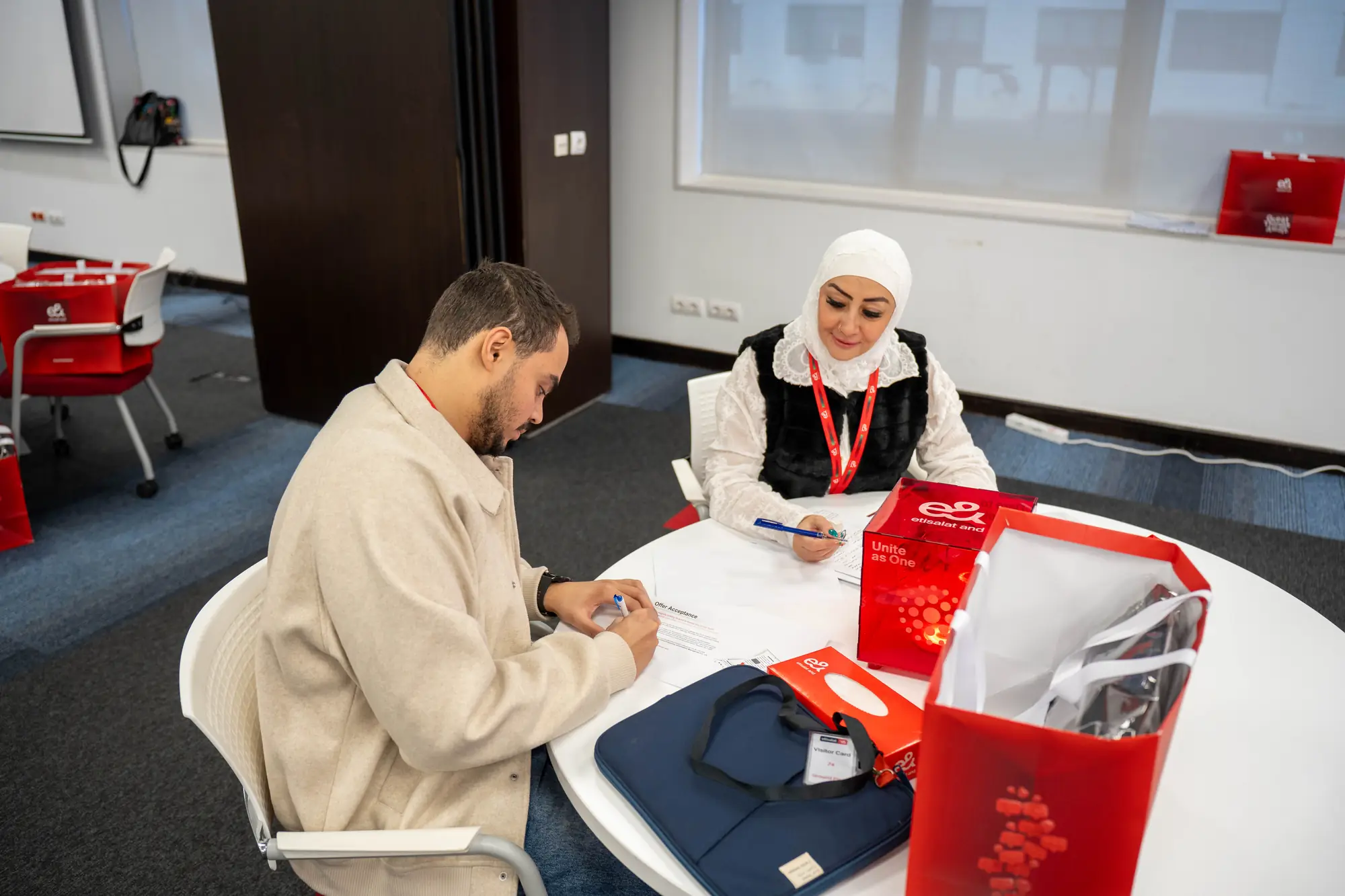
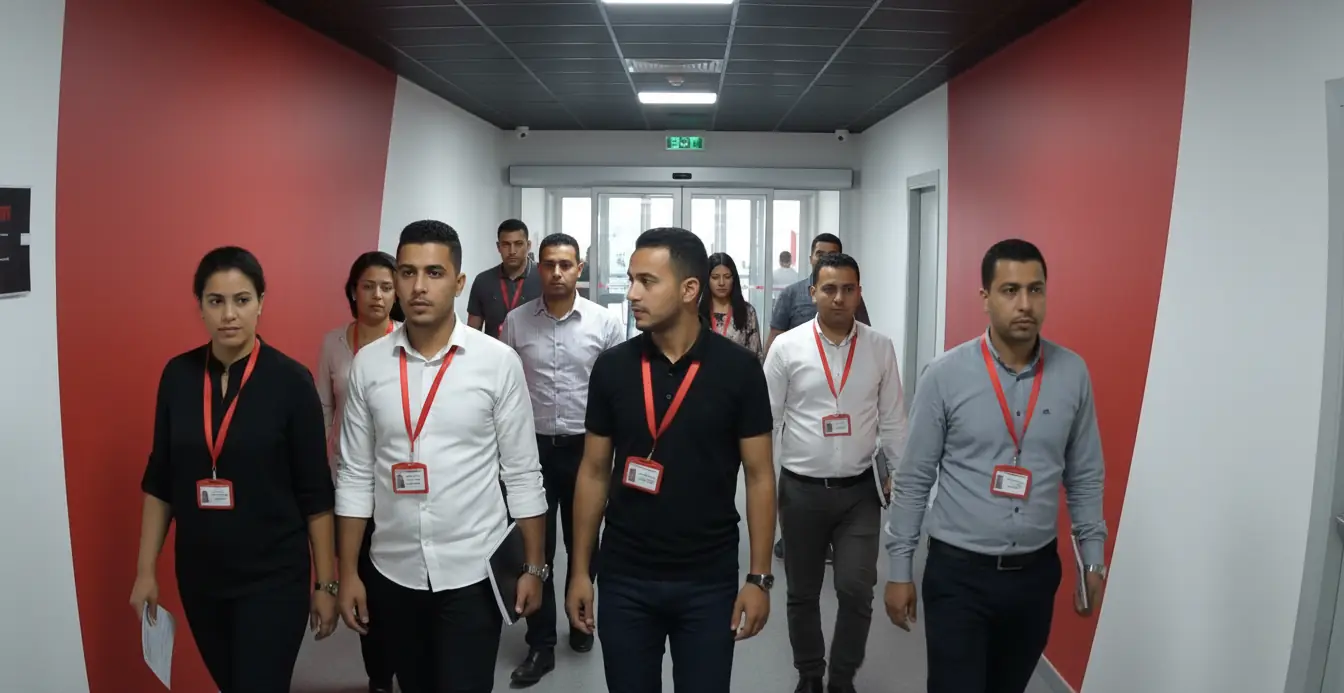
What it looks like when it runs.
Real programs with real people. Tap one to see how we run it.



Employee experience in Egypt, Saudi Arabia and Oman
Practising this discipline in MENA is not the global playbook with Arabic subtitles. Workforce structure is the first difference. In large regional employers, frontline and deskless roles are a core part of the workforce: retail floors, plants, sites, contact centres, clinics, logistics, often with no corporate email address and no habit of opening an intranet. An experience programme designed around desk-based knowledge workers will not reach them. We design for the phone in the hand, in the language the person thinks in, and we treat WhatsApp-first behaviour as a fact to build on rather than a problem to correct.
The second difference is nationalisation. Saudisation, administered through the Nitaqat framework, ties an employer's standing and its access to government services to the proportion of Saudi nationals it employs and retains, which makes the national-employee experience a compliance matter as well as a commercial one. Emiratisation in the UAE and Omanisation in Oman apply comparable pressure through different mechanisms. The practical consequence is the same. Churn among the national population is expensive twice over, and an onboarding journey designed for a mobile expatriate hire will not hold a national graduate whose family, community and long-term career expectations are all in-country. Saudi Vision 2030's Human Capability Development Programme has also raised what employers are expected to offer in development terms, and it increasingly shows up in what candidates ask about.
The third difference is language, hierarchy and data. Bilingual is not translation. An Arabic-first instrument written in Arabic reads differently, and yields differently, from an English instrument run through a translator. High power-distance dynamics mean a manager collecting feedback in the room will collect agreement rather than truth, so anonymity architecture has to be visible and credible before it is technical. Data protection is a live design constraint. Saudi Arabia's Personal Data Protection Law and Egypt's Personal Data Protection Law 151/2020 both impose consent and cross-border transfer obligations that shape where employee listening data is hosted, how long it is kept, and how it may be reported back.
Large domestic workforces across banking, retail, pharma, BPO and manufacturing, often multi-site across Cairo, Giza, Alexandria and Upper Egypt. Where pay increases cannot carry the retention argument on their own, the non-pay elements of the experience carry more of the load, and Arabic-first design is non-negotiable for frontline populations.
Nitaqat banding makes retention of Saudi nationals a governance issue, not only an HR one. Rapid scale-up in giga-projects and newly formed entities means whole populations onboarding at once into organisations whose processes are still being written, which is precisely when a designed first 90 days pays back fastest.
UAE workforces draw on an unusually wide range of nationalities, and visa-linked tenure shapes how far ahead people plan. Emiratisation targets in the private sector create a distinct national-employee journey that usually needs designing separately rather than as a variant of the expatriate one.
A compact, project-driven market where mobilisation and demobilisation cycles dominate the lifecycle, and where a large contracted workforce experiences the employer brand through a third party. Reputation moves quickly through a small professional community.
Omanisation and in-country value expectations put sustained attention on the progression stage of the journey, not only on hiring. Talent pools are small enough that exit experiences travel, which makes re-hire a realistic strategy worth designing for.
Our employee experience services
Four service lines, mapped to where the journey usually breaks. Either you do not know where it breaks, or you know but the fix has never been designed, or the fix is the first 90 days, or you cannot hear the problem early enough to act on it. Each line ends with something your team owns.
EX Diagnostic
01A structured audit of the full lifecycle: touchpoint inventory, systems walk-through, lifecycle survey baseline, exit and regretted-attrition analysis, and interviews across corporate, frontline and manager populations.
Journey Mapping & Moments That Matter
02Bilingual mapping workshops that build employee personas and empathy maps, chart the journey stage by stage, and separate the moments that genuinely shape perception from the touchpoints that merely consume effort. Supported by our Employee Journey Assessment Tool.
Onboarding and First 90 Days Design
03Redesign of the offer-to-90-days stretch: preboarding contact, day one, manager-led week one, buddy structures, 30 and 90-day checkpoints, and the point at which the EVP is either proved or exposed. Can be delivered digitally through our AI-Powered Onboarding Ecosystem.
Voice of the Employee Programme
04Design of lifecycle listening rather than an annual event: first-week, 30-day, 90-day, milestone and exit instruments, Arabic-first question design, anonymity architecture, and a closing-the-loop protocol so response leads to visible action.
How we work: measure, strategize, implement, transfer, document
The same five stages run through every GoldinKollar engagement. Here is what each one produces in employee experience specifically.
 01
01Measure
A baseline of the actual journey, not the documented one: every touchpoint inventoried, lifecycle survey data collected in Arabic and English, 90-day and first-year attrition analysed by function and manager, and the cost of the current experience made explicit.
 02
02Strategize
A prioritised set of moments that matter, personas the business recognises, written experience standards per moment, and a measurement model agreed with Finance and the CHRO before any redesign begins.
 03
03Implement
Redesigned journeys in the field: preboarding and onboarding flows, manager rituals and scripts, bilingual content, digital and gamified elements, piloted with one population before scaling.
 04
04Transfer
Capability inside your team. HR business partners and line managers are trained to run mapping, interpret lifecycle data and maintain standards themselves, supported by the EX Management Academy & Kit.
 05
05Document
The written system, held in your environment: journey maps per persona, experience standards per moment, the bilingual question bank, the listening calendar, and the governance and reporting cadence that keeps them current.
How we measure employee experience across the lifecycle
Experience is measured at the points where it is created, not once a year in aggregate. We instrument a small number of honest metrics and refuse the vanity ones.
Employee Net Promoter Score captured at defined stages rather than annually, so first-week, 90-day and tenured scores can be compared. Useful as a trend and a segment comparison; misleading when read as a single company number.
The share of new hires who leave within their first 90 days and first year, split by function, location, hiring manager and nationality. The most diagnostic number in this domain, and the one least often broken down far enough to act on.
How long a new hire takes to reach an agreed performance threshold, defined with the line rather than by HR. Improvement here is what converts onboarding work into a financial argument.
A short, targeted rating of a specific touchpoint taken close to the event, such as the offer, the first week, a promotion or a return from leave, rather than a general satisfaction question asked months later.
Response rates by population alongside the percentage of raised issues that received a visible response within an agreed window. Participation falls when closure fails, so the two are reported together.
Turnover separated by whether the organisation wanted to keep the person. Total turnover flatters or alarms without informing; the regretted share is what an experience programme is accountable for.
The behavioural science behind our experience design
We design against how people actually form judgements, not how organisations wish they would. Two mechanisms do most of the work. The peak-end rule holds that an episode is remembered largely by its most intense moment and its ending, which is why a well-run final day changes what a leaver says about you far more than a mid-tenure engagement initiative does, and why the first week deserves more design effort than the eleven months after it. Self-Determination Theory identifies autonomy, competence and relatedness as the conditions under which motivation becomes self-sustaining. We write experience standards that make each of those three testable at a specific touchpoint, rather than aspirational in a values statement.
Gamification, in our hands, means structured progression and feedback timing, not points and badges. Progression that is visible, feedback that arrives close to the action, and a clear picture of what mastery looks like are what move a new hire towards competence. A slide-deck induction delivers none of the three. The same applies to managers. The behaviours that create good experience are habits, and habits respond to cues, defaults and short feedback loops rather than to training days.
AI earns its place on the parts of this work humans do badly at scale. It codes open-text lifecycle and exit verbatims in Arabic and English without a person waiting three weeks to read them. It flags a manager or a site whose new-hire signals are deteriorating before the resignations arrive. It personalises onboarding content by role and language. What it does not do is decide what matters: every model output in our work is an input to a human judgement, not a replacement for one.
See 2 pieces of employee experience work in practiceEmployee experience vs engagement, culture, internal communication and employer brand
These disciplines share evidence and often share a sponsor, but they answer different questions. Knowing which one you need first is what stops budget going to the wrong problem.
| Term | What it actually means |
|---|---|
| Employee engagement | The outcome question: how committed are people, and is that changing? Engagement scores tell you something is wrong. Experience work tells you where and what to redesign. It is easy to over-measure the first and under-invest in the second. |
| Culture | The behaviour question: what is genuinely rewarded, tolerated and punished here? Culture sets the constraints a redesigned journey has to survive inside. Improve the journey without touching the culture and it quietly reverts to whatever the culture actually rewards. |
| Internal communication | The information question: does the message reach people, and do they understand and act on it? Communication is one channel within the experience. It can explain a change to onboarding; it cannot substitute for fixing it. |
| Employer branding | The promise question: what do you claim about working here, and to whom? Employer brand sells the experience. Where the experience does not match the claim, stronger branding accelerates attrition rather than reducing it. |
Employee Experience modules we deploy
Start with one module, prove value, then connect it into the broader system.
Employee Journey Assessment Tool
A structured assessment that maps touchpoints, identifies friction, and measures signals across the lifecycle—creating a baseline to prioritize EX investments.
AI‑Powered Onboarding Ecosystem
Not content dumping—signal design. We build onboarding that proves your EVP from Day 1 and sustains engagement for 30–90 days (or longer) through personalization, milestones, and measurable adoption.
EX Journey Dashboard
Aggregates signals from surveys and touchpoints to detect experience drift early, supporting timely interventions by HR and leaders.
EX Management Academy & Kit
Training and toolkits that enable managers to run consistent rituals, reduce friction, and sustain the employee experience system after implementation.
What an employee experience engagement looks like
Scope varies, shape does not. Here is the shape, with the honest drivers of cost. GoldinKollar is quote-based; scope determines price, and we would rather narrow the scope than dilute the method.
- Diagnostic: typically 4 to 6 weeks
Touchpoint inventory, data extraction, lifecycle survey baseline, interviews and focus groups across corporate and frontline populations, attrition analysis. Ends with a findings session and a prioritised shortlist. Can be commissioned alone.
- Design: typically 6 to 8 weeks
Persona and journey mapping workshops, selection of moments that matter, written experience standards, measurement model and business case agreed with the sponsor and Finance before anything is built.
- Build and pilot: typically 8 to 12 weeks
Redesigned journeys, content, manager enablement and any digital or gamified components, piloted with one population or one country, measured against the baseline, then adjusted before wider rollout.
- Transfer and instrumentation: ongoing
Capability building with HR and line managers, listening calendar handed over, dashboard live, documented standards in your environment. After transfer, we would propose a light quarterly review rather than a permanent retainer.
- Headcount and, more importantly, the number of genuinely distinct populations and personas the journey has to serve
- Number of countries and legal entities, each bringing its own labour context, nationalisation regime and data-protection obligations
- Depth of bilingual delivery: Arabic-first instrument design and content production costs more than translation, and is worth it
- Reach requirements for frontline and deskless workers, including shift-time access, device assumptions and site visits
- Whether the build includes digital or AI-supported components and integration with your HRIS and listening tools
- How much capability you want transferred, versus how much you want us to keep running
Engagements are scoped and quoted individually. Book a diagnosis and we will size it against your context.
Employee Experience questions, answered
What is employee experience, and how is it different from HR or an engagement survey?+
Is employee experience consulting the same as HR consulting?+
What is employee journey mapping, and what does a mapping workshop actually produce?+
What are the moments that matter in the employee journey?+
Why do new hires leave in the first 90 days, and how do you fix it?+
How do you measure employee experience, and at what points in the lifecycle?+
How do you design employee experience for frontline and deskless teams in the Gulf?+
How long does an employee experience programme take, and what drives the cost?+
Bring us your 90-day attrition figure
Book a working session with our EX team. Bring your last engagement results, your 90-day attrition figures and one journey you already suspect is broken. You leave with an honest read on where the experience fails, what it is costing you, and what a first phase would need to cover.