
Team building activities for work: 15 that need the whole team
Most lists of team building activities are lists of games. They tell you how to play and never say what the game is for. So the team has a good afternoon, and on Monday the same two departments are still not answering each other's emails.
The short answer: choose the activity by what your team needs to do better, not by how much fun it sounds. A meta-analysis of team-building studies found that goal setting and role clarification had the largest effects of the four components it compared (Klein and colleagues, 2009). Below are fifteen activities, grouped by what each one trains, with how it plays and what it needs. Five of them are from one day we built for MSA University.
How do you choose a team building activity?
Ask one question first: what should this team do differently next week?
| If the team needs | Look for a game where | Activities below |
|---|---|---|
| A shared rhythm | nothing moves unless everyone moves together | 1, 2, 3 |
| Clearer communication | one person sees and the others act | 4, 5, 6 |
| Clearer roles | each player owns one move | 7, 8, 9 |
| Trust | you cannot cover for the person next to you | 10, 11 |
| A common language | the game is played with your own values or rules | 12, 13 |
| A reason to talk across departments | teams are mixed and the score is public | 14, 15 |
Then check three things: the whole team is needed to finish it, nobody can win it alone, and it still works in the tenth round with tired people.
Fifteen team building activities for work
For a shared rhythm
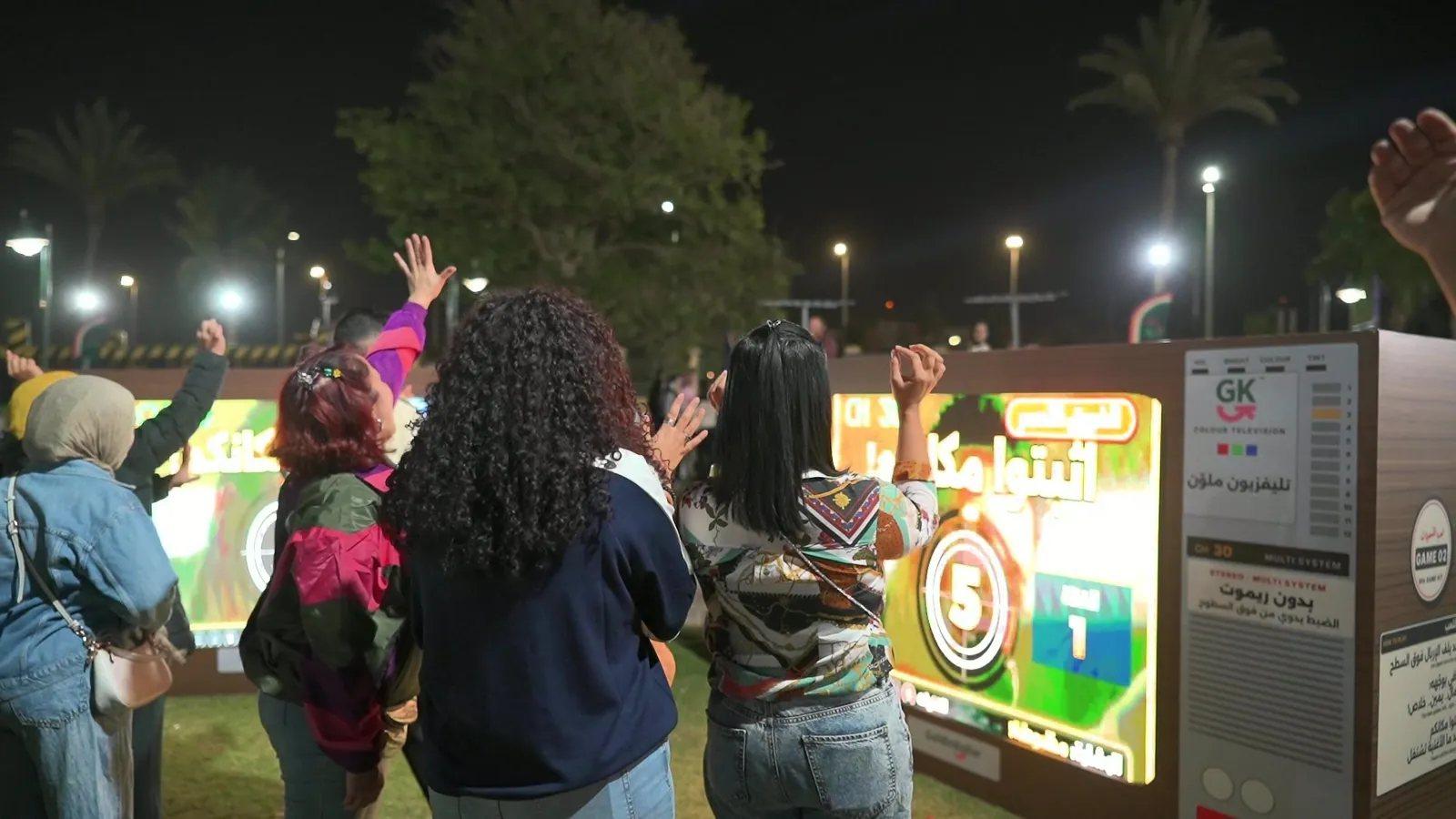
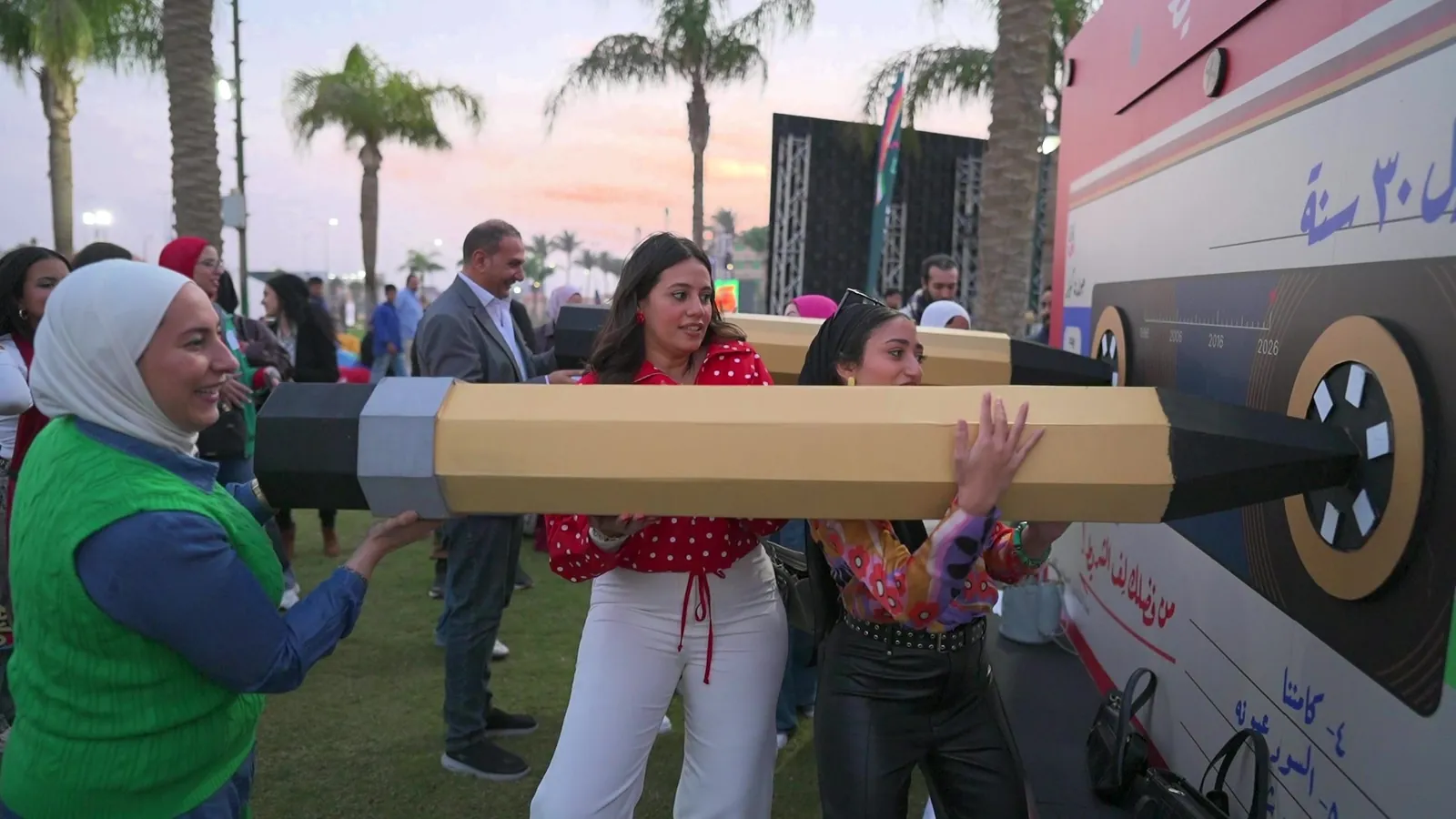
- The giant cassette. A team winds a long tape back into a giant cassette with a giant pencil. It only turns when every hand turns. Two teams race side by side, outdoors.
- Push the car. Two teams push two real cars round a cone course. Nobody moves it alone, and a team that pushes out of step goes nowhere. Needs a closed road and a safety lead.
- The string puzzle. Each player holds one string tied to a piece of a floor puzzle. The pieces move only when everyone pulls together. Works indoors, on any office floor, with a small team.
For clearer communication
- Fix the antenna. One player turns an antenna on a roof while the team watches the screen and calls: left, right, stop. The player cannot see the picture; the team cannot touch the antenna.
- The silent loader. A team loads boxes in a set order. Only one member knows the order, and that member may not speak. Any room, twenty minutes, a stack of numbered boxes.
- Three clues. Three people each hold part of an address. The team finds the place only when all three share what they know, early.
For clearer roles
- One hero, many hands. A giant video game in which one character on the screen is played by the whole team: one player steers, three others each own one move. Every player has one job and the hero needs all of them.
- The relay build. A team builds one object in turns, each member allowed to add only their own part. What goes wrong shows exactly which hand-over was unclear.
- A league for your targets. Teams draft colleagues and compete on live scores over a quarter, like a fantasy league. It makes roles and results visible to everyone. See Business Fantasy.
For trust
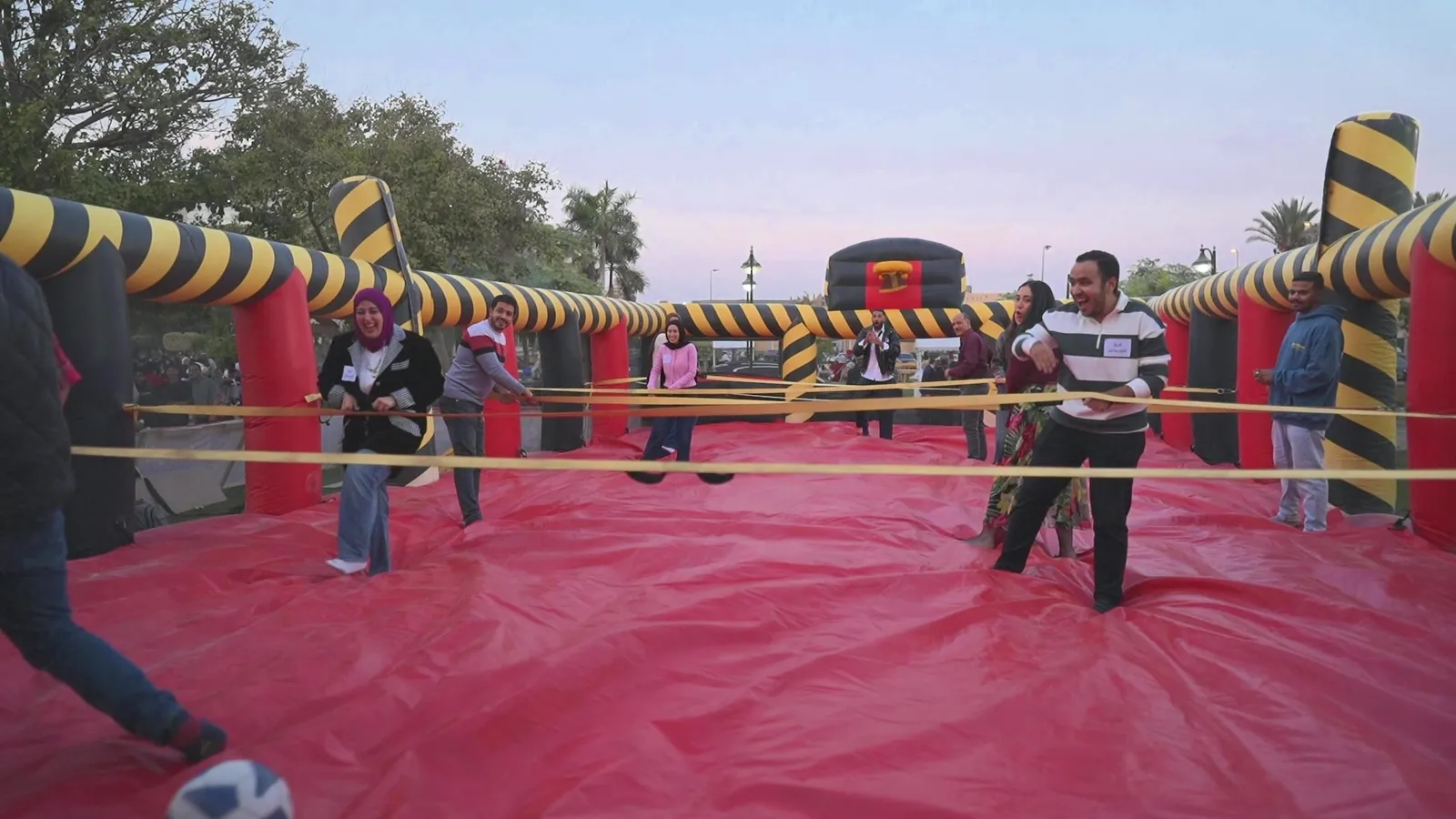
- Human table football. Five a side, each row holding one rope, on an inflatable pitch. You can move only left and right, so you have to trust your row to cover what you cannot reach.
- The fragile chain. A parcel crosses a course from hand to hand. Each person carries it for one stretch and must hand it on. It is slow on purpose.
For a common language
- A board game of your own values. A board, cards and dice in which every move is one of the company's values in a real situation. Colleagues play it at their own table. See how it ran in a values activation.
- Spot the problem. Teams study a scene of a workplace and find what is wrong in it: the safety risk, the data mistake, the broken rule. People remember a rule they caught someone else breaking. See Spot the Problem.
For talking across departments
- Trivia for territory. Mixed teams join from their phones and answer questions to win ground on a map on the big screen. See Trivia Clans.
- A treasure hunt through your own building. Clues lead mixed teams to floors and people they never visit. See the digital treasure hunt.
Activities 1, 2, 4, 7 and 10 were the five games of MSA University's thirtieth anniversary team day. You can watch each of them in the case study.
How do you run them so that something changes?
The game is a third of the work.
- Before: write the one thing the team should do differently, and tell the facilitators.
- During: two teams at each station, fifteen minutes of play and five to move, and one person who can stop any round.
- After: ten minutes in teams before the results. What happened, why, and one thing we will do differently. A meta-analysis of 46 samples found that properly run debriefs improved performance by about 20 to 25 percent (Tannenbaum and Cerasoli, 2013).
- Four weeks later: read each team's commitment aloud in a meeting that already exists.
Plan for everyone. In Egypt and the Gulf that means prayer time inside the schedule, shade and water, games that do not depend on strength or speed alone, and a format in which every colleague is comfortable taking part.
The free team day and activation templates include a station sheet for each game, a rotation plan that builds itself, the run of show and the debrief. For the evidence, read does team building actually work?.
Frequently asked questions
What are good team building activities for work?
Ones in which the whole team is needed and nobody can win alone, chosen for what the team needs: a shared rhythm, clearer communication, clearer roles, trust, a common language, or contact across departments.
What team building activities work for large groups?
Stations. Split the group into teams of ten to sixteen, put two teams at each station, and rotate every twenty minutes. Ten teams need five stations; for a larger group, build each station twice.
How long should a team building activity be?
Fifteen minutes of play is enough for one game. A team day usually has five or six stations, one break and a debrief. A single game with a ten-minute debrief fits inside a team meeting.
Can team building be done in the office?
Yes. The string puzzle, the silent loader, the values board game, spot the problem, trivia and the treasure hunt all run indoors without leaving the building.
Sources
Know someone who should read this?
Share it on LinkedIn with a post that is already written. You can change it before you publish.
Follow GoldinKollar on LinkedIn