
Strategy that is creative, science-based, and executable
People and culture strategy for Egypt and the Gulf, built from evidence and with your team: a costed sequence you can defend upward, not a slide.

What it looks like when it runs.
Real programs with real people. Tap one to see how we run it.
The findings are in. The plan is not.
Strategy work usually starts the week after a survey, an audit or a new brief from leadership. If you recognise one of these, you are in the right place.
- “I have the results. I do not have a plan I can defend upward.”
- “Every department wants its own initiative. My budget covers a few.”
- “We had a strategy once. Nobody could say who owned it.”
- “Our values are on the wall. The corridor runs on different rules.”
- “Leadership wants an EVP. I want one that is true.”
- “We lose people in their first months, and nobody owns onboarding.”
A strategy is not a document. It is a sequence someone can fund.
A generic framework arrives finished: the same pillars, the same quadrants, the same roadmap it gave the last organisation. It looks complete, and it fails the first time someone in your leadership asks why this, and why now.
We build strategy the other way round. We start from what was measured — your data, ours, or both — and from the outcomes that matter to your business: attraction, retention, performance, engagement, advocacy or compliance. We decide with you what goes first, what waits and what gets dropped. Then we cost it and sequence it, so you can defend it upward in one meeting, whether that meeting is in Cairo, Riyadh or Dubai.
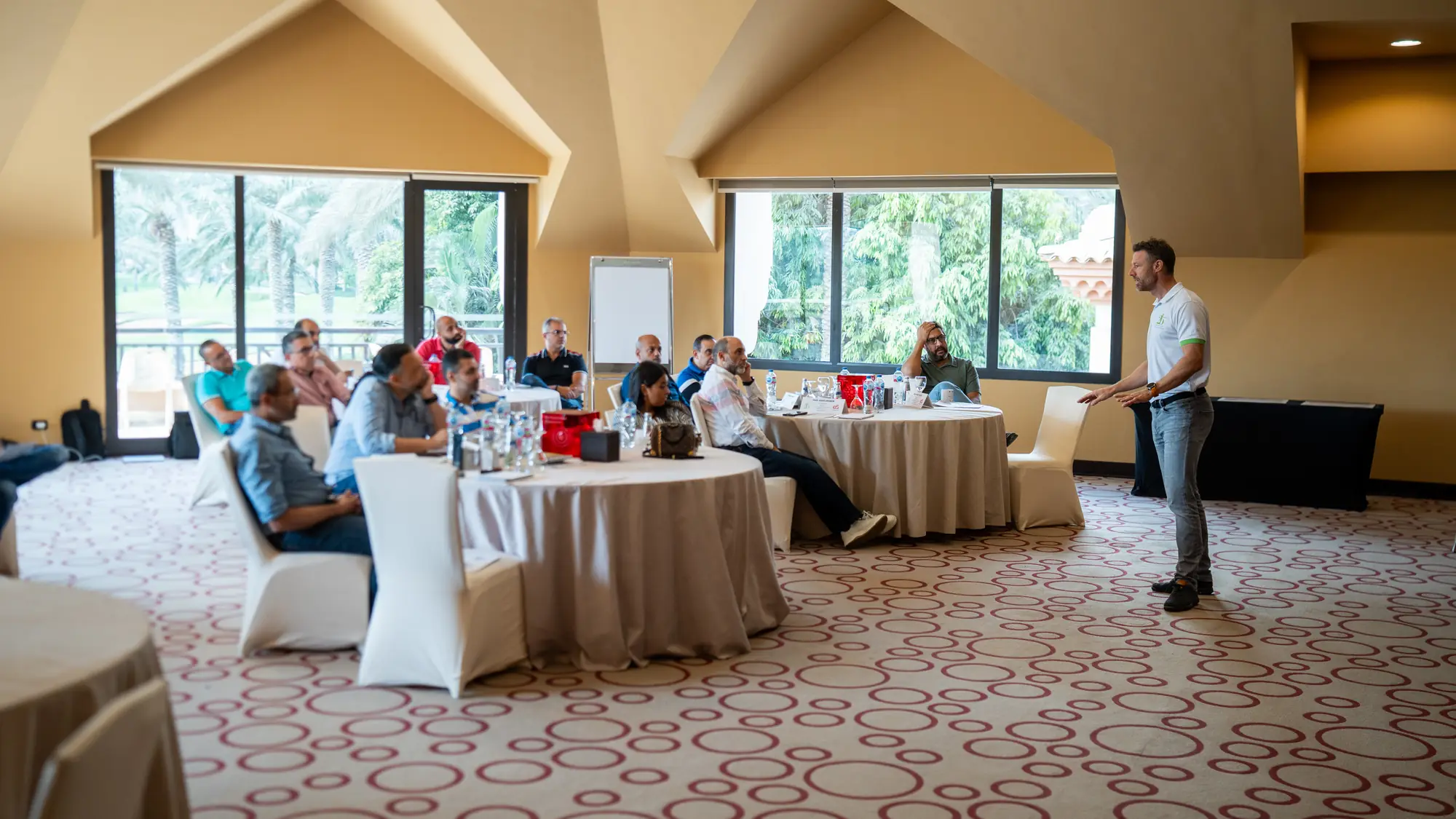
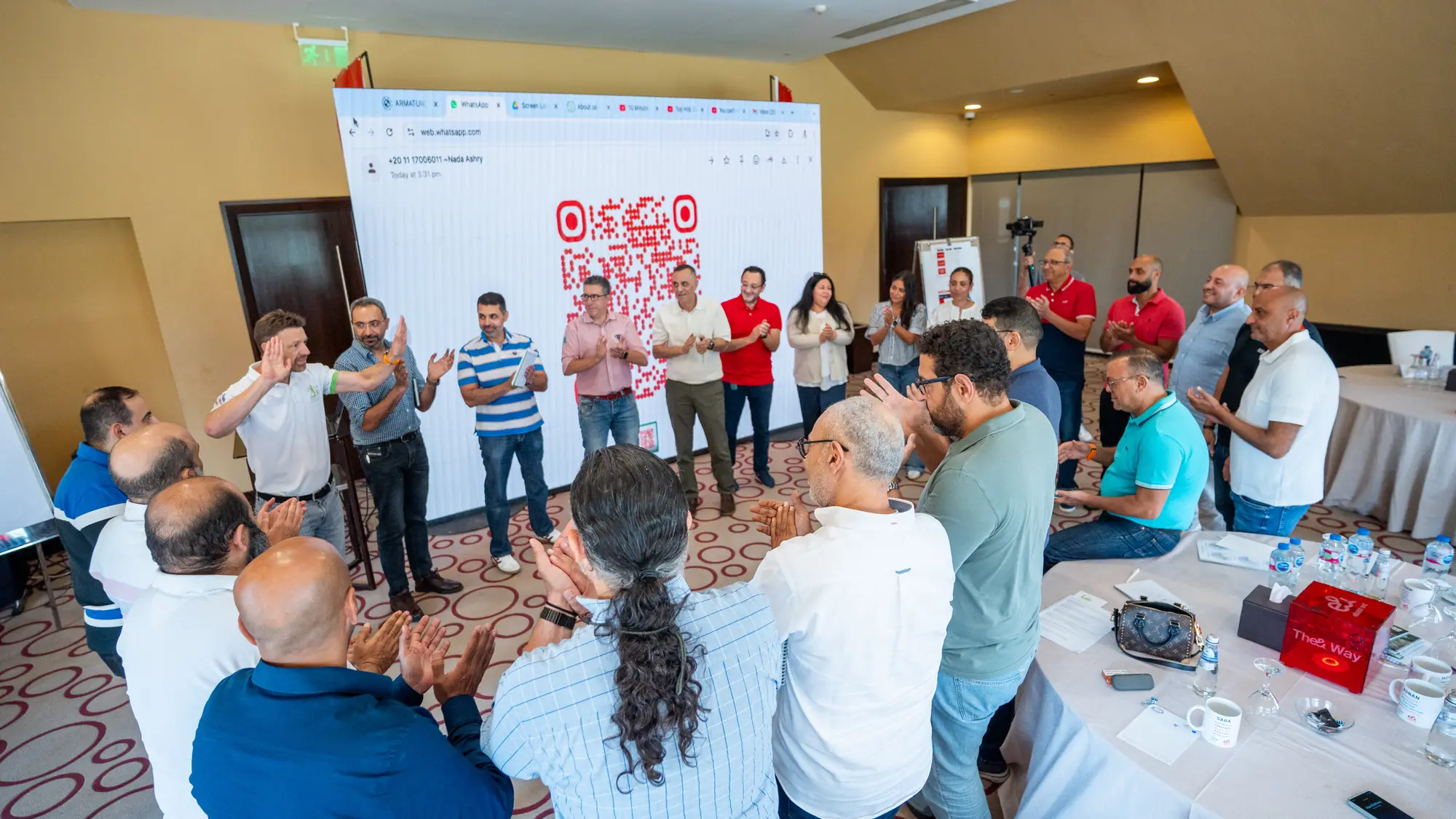
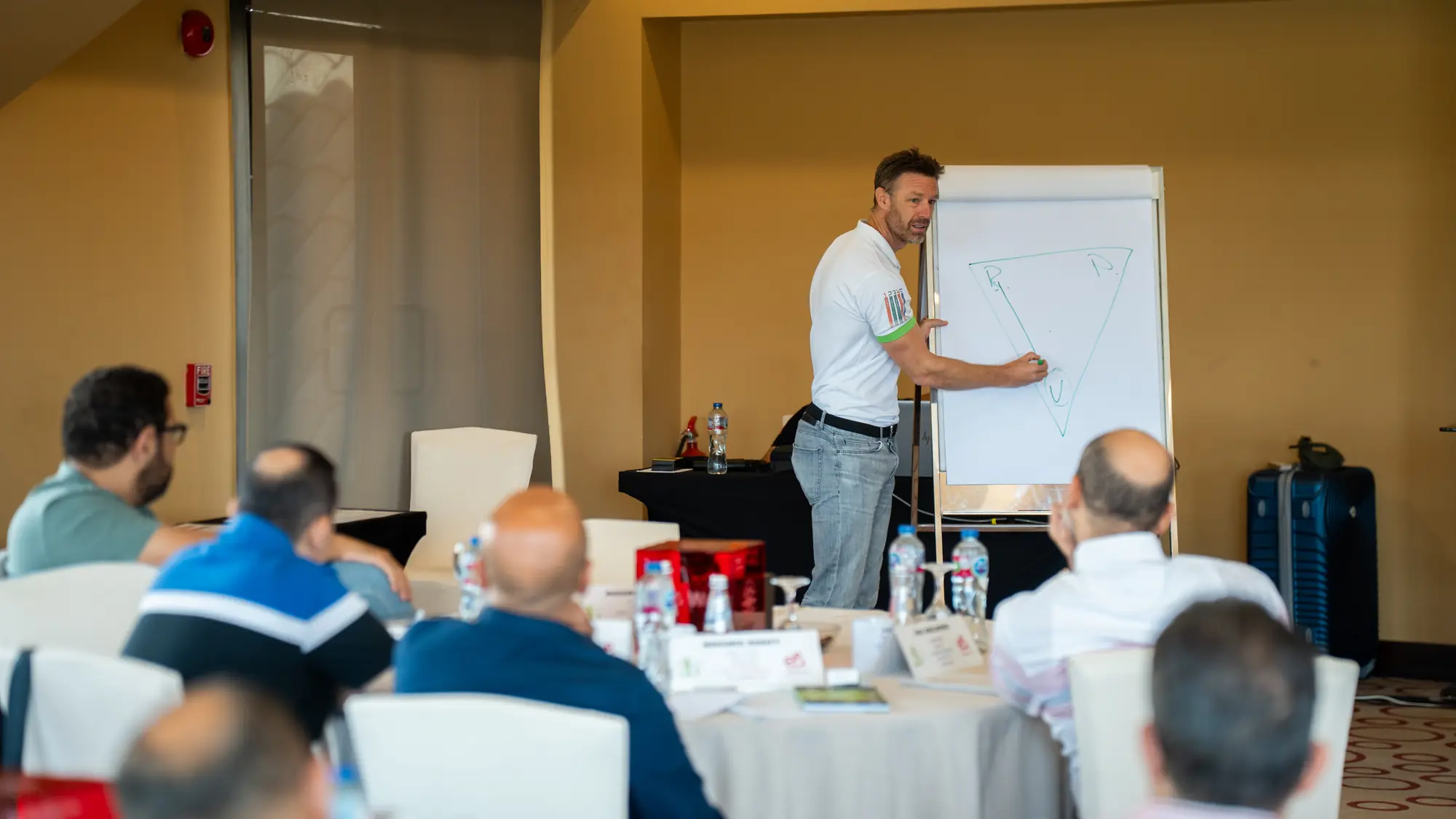
The plan is written with your team in working sessions, not presented to them at the end. By the time it is approved, the people who will run it have already argued with it.
Book a DiagnosisWhat lands on your desk
A strategy engagement produces decisions, and the rules that make them stick. Depending on the area, that means:
A sequence, not a wish list
An activation roadmap that says what happens first, what waits and why, with a content plan wherever communication has to carry the change.
An employer promise you can prove
An EVP narrative and pillar framework, the proof points behind each pillar, and a messaging architecture your recruiters and managers can actually use.
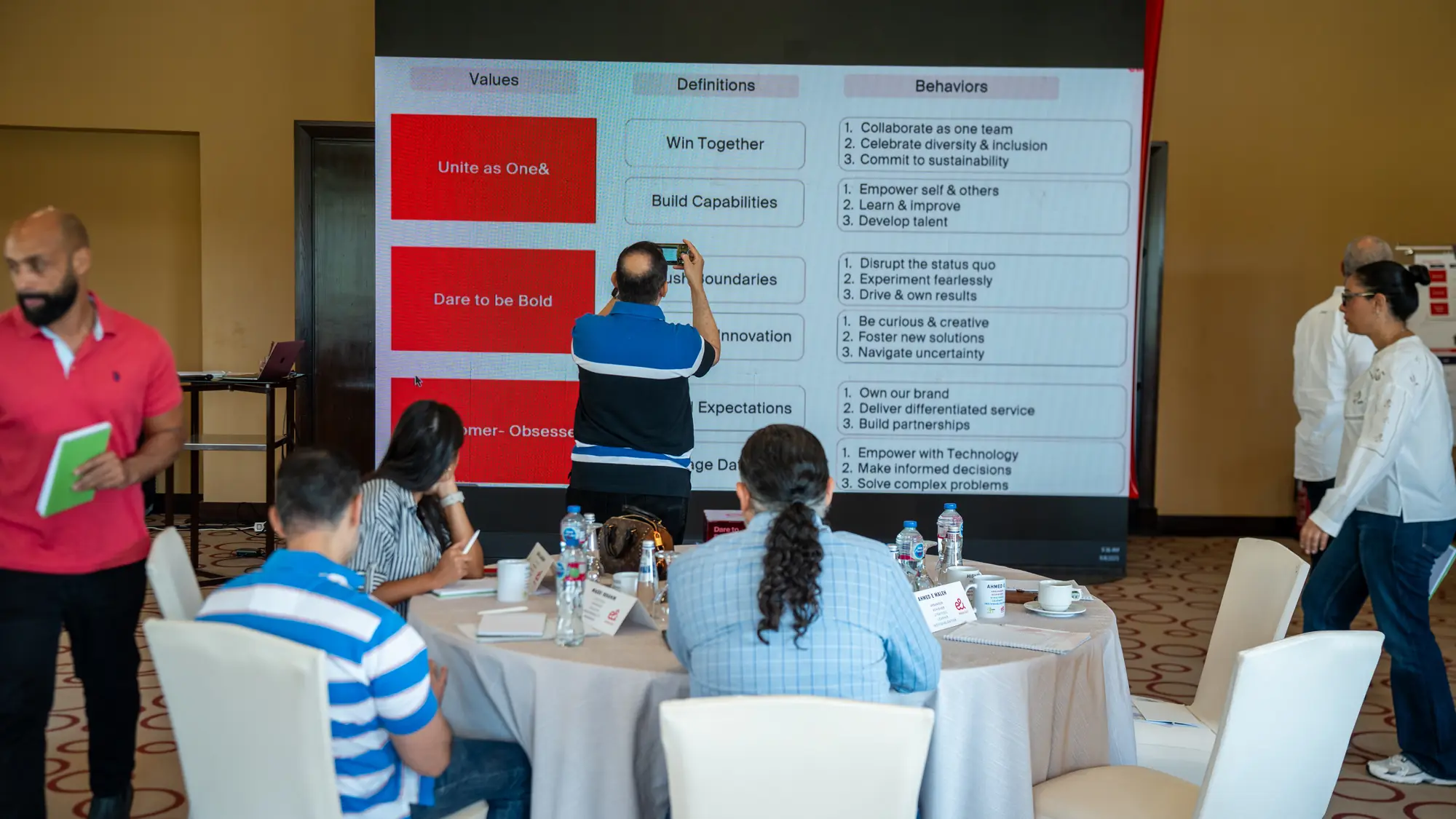
Values translated into behaviour
A values-to-behaviours blueprint and a culture activation roadmap: what each value looks like on an ordinary Tuesday, and which rituals and leader actions keep it alive.
Rules for how the organisation talks
An internal communication strategy with channel rules, governance and an editorial cadence that cuts noise instead of adding channels.
First months that prove the promise
An onboarding strategy and journey blueprint: a 30/60/90-day journey with milestones, tied to your EVP proof points.
An engagement rhythm, not an annual event
An engagement operating model and a recognition system: the cadence, the recognition rules and the leader playbooks.
Modules that fit Strategize
Filtered from our products and suites. Some delivery types also include tailored services.
AI‑Powered Onboarding Ecosystem
Not content dumping—signal design. We build onboarding that proves your EVP from Day 1 and sustains engagement for 30–90 days (or longer) through personalization, milestones, and measurable adoption.
EVP Strategy Sprint
We design EVP pillars, messaging architecture, proof points, and activation plan—anchored to employee truth and business priorities.
Tell us your objective and your scale. We will recommend the cleanest starting point, including when that is a smaller first step.
Strategize, area by area
- Internal Communication
Strategize IC architecture
Build a channel strategy, governance rules, and editorial cadence that reduces noise and increases retention.
- IC Strategy Sprint · tailored service
- Governance & Editorial Operating Model · tailored service
- Employee Experience
Strategize EX journeys
Design 30/60/90-day journeys, milestones, and measurement—aligned to EVP proof points.
- EX Operating Model Blueprint · tailored service
- Employee Engagement
Strategize engagement system
Build an engagement operating cadence, recognition rules, and leader playbooks.
- Engagement Operating Model · tailored service
- Recognition System Design · tailored service
- Culture
Strategize culture activation
Translate values into behaviors, rituals, and governance that leaders can execute.
- Values → Behaviors Blueprint · tailored service
- Culture Activation Roadmap · tailored service
- Employer Branding
Strategize EVP
Define EVP pillars, proof points, and messaging architecture rooted in real employee truth.
How a strategy engagement runs
- 1
Start from evidence
We read what you already have and fill only the gaps that matter. If there is nothing credible to build on, we say so and propose measuring first.
- 2
Agree the outcome and the audience
Which business result the strategy serves, which employees it has to reach, and what success would sound like in their words.
- 3
Build it with your team
Working sessions, not a presentation at the end. Your people argue with the plan while it is still cheap to change.
- 4
Sequence, cost and hand over
A plan in the order it can be funded, with owners, governance and the measures that will tell you it is working.
Before you call
Do we have to measure before we build a strategy?+
Will the strategy be ours, or yours?+
Can you work from values or an EVP we already have?+
Do you also implement the plan?+
Bring the findings. Leave with a plan you can defend.
Tell us what you already know and what leadership is asking for. We will tell you what the plan has to decide first, and what it would realistically cost.